
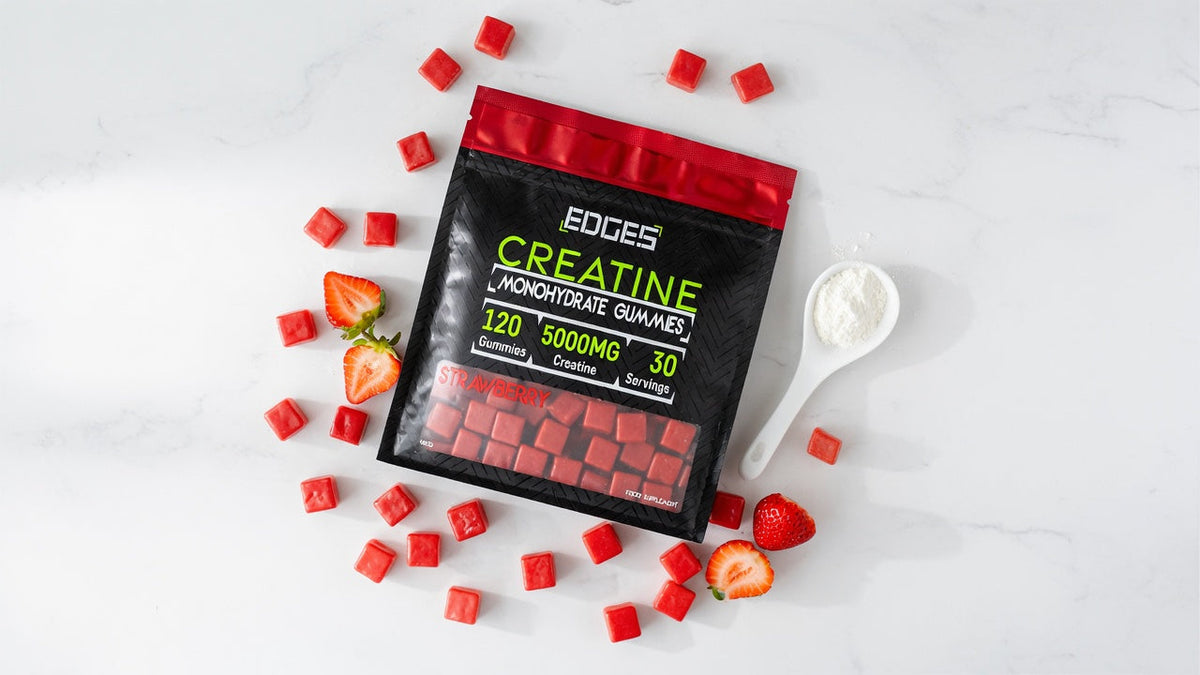
For decades, creatine has been locked in the “bodybuilding supplement” category. Walk into any gym and you’ll see tubs of creatine monohydrate next to protein powders and pre-workouts. But a growing body of research including recent systematic reviews and meta-analyses is making one thing clear: the benefits of creatine extend far beyond bigger lifts and faster recovery.
Creatine plays a fundamental role in cellular energy production. That same mechanism that helps muscle cells regenerate ATP during heavy sets also supports the brain, aging tissues, and groups of people who naturally have lower creatine stores. Here’s what the science actually shows.
How Creatine Works (The Science in Brief)
Creatine is stored primarily as phosphocreatine. When cells need rapid energy, phosphocreatine donates a phosphate group to ADP to quickly regenerate ATP — the body’s energy currency. Skeletal muscle has high energy demands during intense exercise, which is why athletes notice performance benefits. The brain, however, is also an energy-hungry organ. It accounts for roughly 20% of the body’s resting energy use despite making up only about 2% of body weight. When brain creatine levels rise, cognitive processes that rely on rapid energy turnover can improve.
This is the foundation for the non-athletic benefits now being documented.
Cognitive Function: Memory, Attention & Processing Speed
A 2024 systematic review and meta-analysis published in Frontiers in Nutrition (Xu et al.) examined 16 randomised controlled trials involving 492 adults. Creatine monohydrate supplementation produced statistically significant improvements in:
- Memory (standardised mean difference 0.31)
- Attention time
- Processing speed time
The effects were more pronounced in certain subgroups — particularly females and people with existing health conditions. While overall cognitive scores and executive function did not always reach significance, the consistent benefits in memory and processing speed are meaningful for everyday mental performance.
Other research has shown that creatine can help buffer cognitive decline under metabolic stress, such as sleep deprivation or hypoxia. These findings help explain why some people report clearer thinking and better mental stamina when taking creatine consistently.
Healthy Aging: Muscle, Strength & Bone Support
Age-related muscle loss (sarcopenia) and declining bone strength are major public-health concerns. Multiple reviews led by researchers such as Darren Candow have shown that creatine supplementation (typically ≥3 g/day), especially when combined with resistance training, can:
- Increase lean muscle mass
- Improve upper- and lower-body strength
- Enhance functional performance (for example, sit-to-stand tests)
- Reduce markers of bone breakdown in some studies
The combination of creatine + resistance training appears more effective than either alone. While creatine alone does not dramatically increase bone mineral density in every trial, it may support bone health indirectly by improving muscle mass and strength — both protective against falls and fractures.
These effects matter for older adults who never set foot in a commercial gym but still want to maintain independence and physical capacity.
Special Populations Who May Benefit Most
Vegetarians and vegans Dietary creatine comes almost exclusively from animal products. People following plant-based diets typically have lower muscle and brain creatine stores. Several studies have found that vegetarians and vegans show larger improvements in memory and cognitive performance after supplementation compared with omnivores.
Women Women often have lower baseline creatine levels than men. Emerging evidence suggests creatine may support mood and reduce depressive symptoms, particularly when used alongside standard treatments. Some trials have shown faster and greater improvements in depression scores in women when creatine was added to antidepressant therapy.
People under mental or physical stress Sleep deprivation, high cognitive workload, and recovery from illness or injury all increase the brain’s energy demands. Creatine appears to help maintain performance under these conditions.
Dosage, Safety & Practical Use
The most researched and effective form remains creatine monohydrate. For general health and cognitive support, a daily dose of 3–5 grams is commonly used and well-supported. A short loading phase (20 g/day split into doses for 5–7 days) can saturate stores faster, but is not required for long-term benefits.
Creatine has an excellent safety profile. The International Society of Sports Nutrition and numerous long-term studies confirm it is safe across the lifespan when taken at recommended doses. The most common side effect is mild water retention in muscle tissue, which is temporary and generally considered beneficial for performance and recovery.
The Bottom Line
Creatine is no longer just a gym supplement. Robust research now supports its role in:
- Supporting memory, attention, and processing speed
- Helping older adults preserve muscle and functional strength
- Potentially benefiting vegetarians, women, and people under cognitive stress
- Offering a simple, low-cost way to support cellular energy systems throughout the body
If your goals include clearer thinking, healthier aging, better recovery from daily mental demands, or simply maintaining strength as you get older, creatine deserves consideration — whether or not you lift weights.
For those looking for a convenient, high-quality option, Edges.Club offers creatine monohydrate in both powder and gummy formats.
Click here to see Edges Creatine Range.
The research continues to expand, but the message is already clear: creatine’s benefits are not reserved for the gym floor.
Why L-Carnitine L-Tartrate 1300mg Capsules Deserve a Spot in Your Stack
Nitric Oxide Gummies in the UK: What They Are and Why Gym-Goers Are Talking About Them